
Contrary to the claims of many bodybuilders, trainers, and coaches, you can not selectively train for sarcoplasmic versus myofibrillar hypertrophy by working in different repetition ranges. While training with lower or higher repetition ranges can result in differences in improvements in strength relative to local muscular endurance, you can’t separate strength from hypertrophy. After the first couple months of training when neural adaptations contribute more to strength increases than hypertrophy, if you get stronger your muscles will be bigger, and if your muscles get bigger you will be stronger.The relationship between muscular strength and size varies between individuals due to numerous genetic factors, however, so regardless of how you train some people will gain a lot of strength without much size, some will gain a lot of size without getting very strong, and most of us will be somewhere in between:
…chronic resistance exercise training induces skeletal muscle hypertrophy as well as increases in strength. However, not every individual can expect the same magnitude of muscle responses to a standard program because of genetic and environmental factors yet to be thoroughly characterized.
One study with five hundred and eighty five men and women performing the same program of unilateral arm flexor training for twelve weeks showed a huge difference in muscular size and strength gains. The worst responders lost about two percent muscle size while the best responders gained an impressive fifty nine percent. Strength gains varied from zero to as much as two hundred and fifty percent (2):
Men and women exhibit wide ranges of response to resistance training, with some subjects showing little to no gain, and others showing profound changes, increasing size by over 10 cm and doubling their strength. Men had only a slight advantage in relative size gains compared with women, whereas women outpaced men considerably in relative gains in strength.
I suspect the belief you can selectively train for either sarcoplasmic or myofibrillar hypertrophy is based on observation of the difference in training between bodybuilders and strength athletes like powerlifters, and failure to consider selection bias as a significant factor in the differences in the relative muscular strength and size between the two. Any program done hard, progressively, and consistently with a volume and frequency appropriate for the individual will eventually get them as big and strong as their genetics will allow, but the ratio of strength to size gains will vary considerably between individuals. People who can get very strong without much hypertrophy will tend to gravitate towards strength sports where a high ratio of strength to body weight is advantageous. People who are able to gain a lot of muscular size relative to strength will tend to gravitate towards bodybuilding where muscularity is the goal but strength has no bearing on competition.
Someone who fails to consider this selection bias might assume the bodybuilders had a higher ratio of hypertrophy to strength due to their training and the powerlifters have a higher ratio of strength to hypertrophy due to their training, when the differences are mostly genetic.
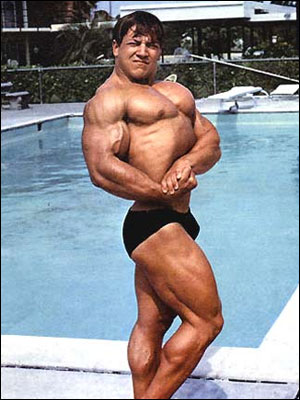
Casey Viator had great genetics for both strength and hypertrophy
If you remove this selection bias and randomly assign people to either a “bodybuilding” or “strength” program with equal volume as Brad Schoenfeld did in a recent study (4), you’ll find no significant difference in the average hypertrophy between the two. The strength group in this study increased their one-repetition-maximum more than the hypertrophy group, but this is most likely due to specific neural adaptations to the lower rep ranges used and if a ten-repetition-maximum test was done instead the hypertrophy group probably would have improved their performance more than the strength group.
If your goal is to improve your performance in a specific range of repetitions you should train in that range, but if your goal is general improvements in strength and hypertrophy the optimal repetition range is whatever you respond best to based on your genetics, and not some arbitrary range of repetitions claimed to be specific for hypertrophy.
Stuart Phillips, PhD from the kinesiology department at McMaster University recently had this to say about the subject:
Sarcoplasmic vs. Myofibrillar hypertrophy… perhaps you’ve heard those terms and even read information from some guru who says there are different types of ‘hypertrophy’. This is unadulterated garbage and basically anyone who has ever taken a course in muscle physiology, exercise physiology, and knows a little biochemistry would tell you so. The amount of myofibrillar protein in skeletal muscle fibre remains remarkably constant! There are no examples of where a muscle fibre hypertrophies with resistance training and the myofibrillar pool doesn’t grow but the sarcoplasm does! The occasional example of a discordance between hypertrophy and strength gain (for example http://www.ncbi.nlm.nih.gov/
pubmed/22518835 (5)) is not, no matter what the pundits think, due to a ‘sarcoplasmic’ hypertrophy in the low-load condition. The obvious explanation is a neuromuscular training-zone specific strength response in the low vs. the high load groups – muscle/exercise physiology 101. Similarly, I’ve heard some say that blood flow restriction (BFR) training leads only to ‘sarcoplasmic’ hypertrophy… it’s a myth! Hypertrophy, when it happens is due to expansion of the myofibrillar protein pool. For people who think that your fibres can grow (not transiently due to fibre swelling – a short-lived phenomenon) by expanding their sarcoplasm are incorrect. If this happened the energetics of the fibre would be a complete mess due to greatly, on a relative scale, increases in intracellular distances for chemical reactions… like propagation of the electrical impulse from a t-tubule to the SR to cause contraction!So the next time you hear someone spouting off about sarcoplasmic hypertrophy you can tell them, with confidence, that no such thing exists! It’s a construct of bodybuilding forums… hypertrophy is hypertrophy and strength is strength. There’s no difference between the hypertrophy you get with one routine versus the next!

Ken Leistner demonstrates his unusually high ratio of muscular strength to size, squatting 415 pounds for 23 reps at a body weight around 165 pounds
I also recently discussed this with Ryan Hall and he also shared the following:
I reviewed a few studies concerning sarcoplasmic vs. myofibrilar hypertrophy several years ago:
This is in line with other research I’ve seen suggesting that all structural components of muscle fibers hypertrophy simultaneously with training.
“This implies that with exercise-induced hypertrophy, the sarcoplasmic reticulum, cytoplasm, and lipid components increase proportionately with contractile protein…”
Functional and structural adaptations in skeletal muscle of trained athletes. S. E. Alway, J. D. MacDougall, D. G. Sale, J. R. Sutton, A. J. McComas. Journal of Applied PhysiologyMar 1988,64(3)1114-1120;Other studies show similar results.
“This hypertrophy of muscle fibers by 30% with training resulted in no change in the cytoplasm-to-myonucleus ratio.”
Effects of high-intensity resistance training on untrained older men. II. Muscle fiber characteristics and nucleo-cytoplasmic relationships. Hikida, RS, Staron, RS, Hagerman, FC, Walsh, S, Kaiser, E, Shell, S and Hervey, S. J Gerontol A Biol Sci Med Sci 55:7, B347-54 (2000)
Given the above data, it seems unlikely that selective hypertrophy occurs, at least in the confines of most strength training protocols.
In a nutshell, you don’t need to train with different repetition ranges for general strength increases or hypertrophy. A variety of repetition ranges can be effective for both. However, depending on your genetics you may respond better to either a lower or higher repetition range. I cover this in detail in the chapter How To Find Your Optimal Repetition Range in the updated and expanded High Intensity Workouts.
References:
1. Association of interleukin-15 protein and interleukin-15 receptor genetic variation with resistance exercise training responses. Steven E. Riechman, G. Balasekaran, Stephen M. Roth, Robert E. Ferrell. Journal of Applied PhysiologyDec 2004,97(6)2214-2219;DOI:10.1152/japplphysiol.00491.2004
2. Hubal MJ, Gordish-Dressman H, Thompson PD, Price TB, Hoffman EP, Angelopoulos TJ, Gordon PM, Moyna NM, Pescatello LS, Visich PS, Zoeller RF, Seip RL, Clarkson PM. Variability in muscle size and strength gain after unilateral resistance training. Med Sci Sports Exerc 37: 964–972, 2005.
3. Timmons JA. Variability in training-induced skeletal muscle adaptation. J Appl Physiol (1985)2011;12:846–853. doi: 10.1152/japplphysiol.00934.2010.
4. Effects of different volume-equated resistance training loading strategies on muscular adaptations in well-trained men. Schoenfeld BJ, Ratamess NA, Peterson MD, Contreras B, Tiryaki-Sonmez G, Alvar BA. J Strength Cond Res. 2014 Apr 7. [Epub ahead of print]
5. Resistance exercise load does not determine training-mediated hypertrophic gains in young men. Cameron J. Mitchell, Tyler A. Churchward-Venne, Daniel W. D. West, Nicholas A. Burd, Leigh Breen, Steven K. Baker, Stuart M. Phillips. Journal of Applied PhysiologyJul 2012,113(1)71-77;DOI: 10.1152/japplphysiol.00307.2012
Comments on this entry are closed.
Hey Drew,
I’ve meant to ask this before, why do the huge quotation marks appear on these articles, I find them annoying as they cover half of the words ?
Justin,
They are how the Wordpress theme I’m using identifies block quotes. They should be left aligned and not covering the text though. If you can let me know what platform you’re viewing the site on I can look for a fix.
They show up that way in Internet Explorer, which is an extremely crappy browser but is also the only choice on the Surface RT tablet 🙁
It doesn’t seem to be a problem for me on my desktop with either Chrome or Firefox.
Thank you for the article, by the way. It is an interesting subject, and I’m going to send a link to a buddy of mine by way of continuing a conversation we were having on a somewhat related topic, so the timing is great 🙂
Hey Robby,
Thanks for letting me know. I will look for a fix for this, or offset these blocks of text differently if I can’t.
I love articles like this.
Excellent post Drew! Would you be willing to write about resistance training for women and how it does or does not differ from men’s….. and if women doing higher reps to build muscular endurance would result in toned body without building muscle?
It is a great privilege to read and learn through your knowledge and experience. Thank you!
Daman
Daman,
You’re welcome. Other than slight adjustments to exercise performance to accommodate biomechanical differences women should train following the same principles as men.
I agree 100%! I had a friend who looked into hyperplasia. He researched it to the very depth, and came to the same conclusion…there is zero proof it is possible. It’s wishful thinking of others.
Lifter,
There is plenty of evidence for hyperplasia in animals, including other mammals, so it might be possible, but there is currently no good evidence for it in humans.
What might be the possible stimulus for hyperplasia in humans?
Donnie,
If muscular hyperplasia occurs in humans the stimulus would be the same as that for hypertrophy – demanding muscular work. There has been some speculation that injecting IGF-1 and HGH might cause muscle hyperplasia in humans, but I haven’t seen anything to support it.
Exactly Drew, that is where the whole concept falls flat. It is a grey area at best. I wish there was another way for us all to split our muscle fibres, 20+” arms would no longer be a struggle.
Lifter,
That would be nice, although I imagine it would make buying dress shirts more difficult.
LOL Try impossible! I had to wear a suit last week for a presentation, talk about squeezed in a staitjacket. But the discomfort and inconvenience is well worth it. 🙂
Drew, I congratulate you on the article. As always, deepens into the most important issues of strength training, based on scientific evidence.
I always thought that if there is a band of optimal repetitions for each person and muscle group, and if the exercise is done properly and gradually promotes increased strength and consequently muscle mass, made little sense all literature and opinions regarding different number of repetitions performed for force or mass.
If I do not work within my optimal range will not progress well, and if there is no increase of force will neither mass, so what sense does it work outside the optimal range?.
I just bought his book New High Intensity Workouts e-book version and I see that it also addresses this issue, in my opinion, is critical in the design of effective custom workouts.
Already knew and applied in my own training methodology commented to find the optimal number and rep range.
In my case I have found that the upper part both pull and push forces, the optimal number stands at something “as low” as 4 repetitions. This also coincides with the number of repetitions that better progress by adding small amounts of weight each session, rather than trying to increase the number of repetitions. It goes against almost everything I read hear, make such a low number is not recommended almost never (except in sports specific workouts competitive strength).
So 4 repetitions in 25 seconds, at a rate of about 6 seconds per repetition. 4 may seem small, but there are 10 series made in less time. In my case, that reasonable cadence and performing the exercise smoothly, I have found that improved more with 4 repetitions.
Hey Jose,
There is a lot of variability in response to exercise and a few people will respond better to very low or very high reps. As long as you are performing each repetition with good form lower repetition ranges can be used safely.
Drew,
Thank you for bringing to light the differences between body types like Ken Leistner and Casey Viator.
I’ve been doing my own research and I’ve found that we, as humans, have an amount of control over our natural hypertrophy (enlarging muscle cells) through exercise or unnaturally with anabolics.
But, hyperplasia (multiplying muscle cells) is a process brought about through selective breeding and takes generations to produce. As is the case with Belgian Blue cattle.
I hope this link to the video works:
link text
I imagine anyone interested in muscular development has stumbled upon these videos and related research.
Key phrases that stood out, to me, were:
– selectively breeding the most muscular cattle
– selecting the specific sperm
– taking over 100 years to create such a muscular phenomenon (the cattle family tree was very educating)
So, knowing full well that I’m preaching to the choir, this subscribes to what Drew often refers to in an individual’s genetic potential. And it is instructive to be able to rationally explain this to people who say that you are not as muscular as they are because “you don’t train at different angles, explosively enough, heavily enough, higher or lower rep ranges, or… in a sarcoplasmic/ myofibrillar hypertrophic way.”
Hey Ben,
Unfortunately, most people don’t understand this or the degree to which response to exercise and the potential for muscular strength and size increases varies between individuals, so they’ll continue to fall prey to the marketing claims of bodybuilding magazines, supplement companies, and trainers and coaches who tell them they can go “beyond their genetics” and similar nonsense. Some have misinterpreted epigenetics as proof of this, but while epigenetics shows activity and the environment has a huge effect on how our genes are expressed, the genes themselves still set the limits of things like how big and strong you can get.
Drew,
Don’t I know it:/ It gets tiresome in face of so much ignorance, but I’m always up for educating someone willing to listen.
So are you familiar with Belgian Blues? Their breeding process seems to disprove real time hyperplasia, ie., one can’t multiply muscle cells.
Your thoughts?
Ben,
Yes, I’m familiar with Belgian Blues and the various other animals the genes for myostatin have been studied in. Hyperplasia has been shown to occur in other mammals under specific conditions, but I suspect the Belgian Blues size is due to hypertrophy rather than hyperplasia of muscle fibers (Mechanical overload and skeletal muscle fiber hyperplasia: a meta-analysis. George Kelley. Journal of Applied PhysiologyOct 1996,81(4)1584-1588;)
5-8 reps is great for rock hard dense muscle. I usually push for 9-10 reps before adding a bit more weight, which then puts me back to 4-6 reps before working upto 9-10 again. Now and then I’ll do different reps but 5-10 is my main rep range
Drew,
I read the article (and thank you for posting).
So it sounds like hyperplasia is possible in mammals but not humans?
Ben,
Hyperplasia is known to occur in other mammals, and it might be possible in humans but there is no evidence for it.
So basically, when I hear muscle heads talking about how they achieve hyperplasia with GH, “because it multiplies muscle fibers”, that’s
bs, right?
The only expression on the muscle, with anabolics or whatever, is strictly a hypertrophic one, correct?
Not trying to sound redundant, just want to separate fact from fiction.
Hey Ben,
You are correct, it is most likely bullshit. There is no evidence yet of skeletal muscle hyperplasia in humans.
What I find extremely confusing is eating. On the one hand it is said if you want to get bigger you need to eat more. On the other hand its said that if you are still getting stronger then you are growing. There is a conflict baked in here that suggests while getting stronger I can control my size gains with my diet. And were talking about muscle size not fat…
I think it makes more sense that people are just trying to explain the difference in size they see in different individuals. For me, I am interested mainly in getting stronger. I expect a side effect will be that I get bigger. But there are many 5’8″ people online much much stronger than me but no heavier. Makes me feel like I won’t really grow. But based on this, I probably will.
I’m still confused but its easier not to believe in things I don’t understand 🙂
Carl,
The theory it is possible to train specifically for sarcoplasmic or myofibrillar hypertrophy was based on the observation the ratio of strength gains to hypertrophy varies between individuals, but this is mostly due to genetic differences and diet, not training.
Because there is also a neural component to strength it is possible to increase strength significantly with little change in hypertrophy at first if food intake is insufficient for growth, but neural adaptations will only get you so strong. To become as strong as possible it is necessary to eat enough to provide your body with energy and materials above what is required to maintain your existing body mass to build new muscle.
Don’t bother comparing your strength to others. There are many factors affecting strength that vary between individuals other than muscular size that are not obvious, so just because someone has less or more muscle mass than you doesn’t necessarily mean they will be weaker or stronger. It is possible for someone with much less muscle mass to be much stronger than you, or for someone with much more muscle mass to be weaker depending on these other factors.
Hi, how can you tell what range is optimal for you? In terms of high rep or low rep. When you are a woman who has just begun weight training, how would you know what range to work in? Should I be working in both ranges? Let’s say I start with a bit higher rep range like 10-15 , how long do I wait to see if I respond before I switch to lower reps?
Sorry, I’m a bit confused….
Thanks!!
Hey Juls,
There are several methods of determining this, based on either fatigue-response testing or evaluation of repetition count patterns over time. I have written a detailed explanation of how to determine this in High Intensity Workouts.
I can easily accept that two people who both max out at 315 on the bench will have different pectoral mass based on genetic variations in their muscle composition. But unless genes sway your moods and dispositions I seriously doubt that all the difference between bodybuilders and powerlifters is due to them migrating to the sports that suit their genes. Rather, I think the issue here is one of people misunderstanding what sarcoplasm is. Myself, I always thought that referred to the fluid in between the muscle fibers, not the fluid within the fibers. So I thought it was water, glycogen, and whatever else. And based on my reading earlier today I see that I am not alone in this misunderstanding. I have no doubt that a bodybuilding style routine triggers more storage of this fluid than a powerlifting style routine because the added glycogen is essential for endurance. And when I say “sarcoplasmic hypertrophy” it is this added glycogen and water that I am referring to. The one study cited in the article fails to address this particular issue because it was erroneously designed with equal volume for both protocols. The most fundamental difference between bodybuilding and powerlifting is the volume of work. Bodybuilders don’t merely do more reps. They do more sets and often work out more frequently. A bodybuilding routine is very much built on volume. So I would be very interested in seeing research into how much size is gained from this added fluid and what rep range is needed to induce the storage of more glycogen. Especially since there has to be a tipping point between the anabolic trigger to build muscle and the catabolic state of pure endurance exercise like running.
In the meantime, I promise to quit saying “sarcoplasmic hypertrophy”. I’ll find another way to tell bodybuilders their muscles are just water balloons.
Hey John,
Research doesn’t support the claim it is possible to preferentially train for one or the other. If there is myofibrillar hypertrophy there will be an increase in sarcoplasm, and vice versa. I can understand how people might believe this, however. It certainly looks that way if you are unaware of or dismiss selection bias.
I understand that you can’t specifically train for strength and completely shut out hypertrophy and vice versa, but can you say that you can train PRIMARILY one with the other being trained in a supplementary fashion? Ex: Low reps = Mostly training strength and your CNS, but you’ll still get some hypertrophy. Mid to high reps = Mostly training hypertrophy, but you’ll still get some strength. Evidence of this is found in your own reference of a study by Brad Schoenfeld, which resulted in the people who had trained in the lower rep ranges with a higher one rep max.
Hey Blake,
The difference in study results were more likely due to specificity of practice and would not make a difference in general application of strength. You can’t train for one or the other, the ratio is primarily genetically dictated and all you can do is get as strong as possible and either hope you’ve got the genetics for a lot of hypertrophy relative to strength if you’re a bodybuilder, or very little hypertrophy relative to strength if you compete in a sport with weight classes.
Hi
Firstly really interesting article, albeit, a bit confusing for me at the moment so i wondered if you could help iron a few things out for me?
I take part in sports that require strength but i want to keep my weight at around 80-85 kgs. I do alot of body weight and resistance based circuits and HIIT along with tge cardio that comes with martial arts. So what i wanted to know is what sort of rep range would i want to be finishing a particular set on (im assuming i’d want to build up to my max resistance/specific reps, and sets for warm up in any given session) to get mazimum strength gains with as little muscle building as possible?
Thanks
Hey Jonny,
You can not train selectively for muscular strength or size; they are related and the relationship is genetically dictated. As I mentioned at the end of the article I explain how to find your optimum repetition range in the chapter How To Find Your Optimal Repetition Range in High Intensity Workouts.
Could the information in there also be applied to TSCs? If optimal repetition range is linked to TUT, then might optimal TUT for isometrics also vary between individuals?
Hey Mark,
Absolutely, but it takes a lot more experimentation to determine this if you don’t have machines like RenEx or ARX which measure and display force input during TSC. The TSC protocol I recommend is based on my work with Ken Hutchins training people isometrically on the RenEx iMachines and average fatigue responses. If someone doesn’t have access to these another option would be to look for patterns in hold times using the timed static contraction/static hold hybrids I discuss in Timed Static Contraction Training.
Interesting, I will re-read that section! Thanks for the reply.
Dear Drew Baye
Let’s say I consistently improve my reps on pullups. Does this mean my strength is increasing and therefore hypertrophy is round the corner? Or is it all neurological?
Thanks mate. Longtime fan.
Hey Ahmed,
The initial improvements in exercise performance are primarily neurological, however if all else remains the same (range of motion, cadence, etc.) and you continue to increase the number of repetitions you can perform you will increase the strength of the muscles involved. If those muscles are getting stronger they are also getting larger, but the exact ratio varies between individuals and some people will gain a lot of size relative to strength, some will gain very little size despite significant strength increases, and most will be somewhere in between.
Thanks so much, Drew Baye. Is this where somatotype plays a role? Like an ectomorph’s gain in both strength and size will be minimal, whereas the mesomorph will gain more in strength as well as size, and so on? Will that be correct?
Hey Ahmed,
An individuals genotype which affects their ratio of hypertrophy to strength gains would influence their phenotype, in this case their somatotype, and not the other way around.
Hi, I hope you still monitor this page so you can comment on this.
I was searching for “sarcoplasmic hypertrophy” (with quotes) on scholar.google.com and your page was on the second page of results. The first page, however, had results from The Journal of Strength & Conditioning Research, Strength & Conditioning Journal, Journal of the International Society of Sports, Physiological Reports, etc., all with the terms “sarcoplasmic hypertrophy”.
Regarding the comment on intracellular distance for chemical reactions, Kandarian et al, in 2 separate studies: “Contractile properties of skinned fibers from hypertrophied skeletal muscle” and “Force deficit during the onset of muscle hypertrophy”, reported deficit in tension per cross sectional area. The conclusion in the first study is: ” Initial functional deficits are explained in part by an enlarged interstitial space and decreased protein concentration; later deficits are likely accounted for by intracellular changes.”. The second study says: “Since the single fiber Po/CSA was only slightly decreased, these data suggest that during tetanic stimulation of whole muscle Ca2+ delivery to the contractile apparatus may be impaired”.
Although neither of the preceding 2 studies contain the words “sarcoplasmic hypertrophy”, it does seem to imply that increased intracellular distances do not cause complete mayhem in the myocytes as suggested by Mr Philips. Other studies indeed mention SH as an increase in sarcoplasm and other non-contractile proteins such as desmin, etc (mainly proteins involved in M-line and Z-discs).
I’m looking for an intelligent discussion, since the terms “sarcoplasmic hypertrophy” were included in peer-reviewed scientific literature (and also in Supertraining by Mel Siff), so not just on bodybuilding forums… however none of the studies I read had any explanations regarding the arguments you mentioned in your article.
Finally, I also recently read: “The Mechanisms Of Muscle Hypertrophy And Their Application To Resistance Training”, a review by by Brad Schoenfeld. The following quote is interesting:
“It is hypothesized that hypertrophy may be augmented
by an increase in various noncontractile elements and fluid
(108,205). This has been termed ‘‘sarcoplasmic hypertrophy,’’
and may result in greater muscle bulk without
concomitant increases in strength (154). Increases in
sarcoplasmic hypertrophy are thought to be training specific,
a belief perpetuated by studies showing that muscle
hypertrophy is different in bodybuilders than in powerlifters
(179). Specifically, bodybuilders tend to display a greater
proliferation of fibrous endomysial connective tissue and
a greater glycogen content compared to powerlifters
(109,177), presumably because of differences in training
methodology. Although sarcoplasmic hypertrophy is often
described as nonfunctional, it is plausible that chronic
adaptations associated with its effects on cell swelling may
mediate subsequent increases in protein synthesis that lead
to greater contractile growth.”
This may seem to imply that the increase in muscle CSA with a much smaller increase in myofibrillar CSA (54% vs 14% as per on the study referenced) in hypertrophy when compared to sedentary control could be related more to endomysial connective tissue (and glycogen).
Hey Simon,
None of this would support the idea that one can train specifically for one or the other in the long term as opposed to simply having differences in relative rates of hypertrophy, and as I mentioned the differences observed between bodybuilders and powerlifters are most likely the result of selection bias.
Thank you for replying. I thought I would receive an email if you replied, but I didn’t, so it’s a good thing I came back to check.
I agree with you on rep ranges versus hypertrophy. I haven’t read any study claiming any link between rep ranges and type of hypertrophy. Also, I can’t find the main study referenced by Siff (by Nikituk and Samoilov : “The adaptive mechanisms of muscle fibers to exercise and possibilities for controlling them”), so I can’t comment further on their findings. It would be interesting to see a long term study (12 months+) on actual measurements of ratios between contractile proteins and sarcoplasm in the myocytes of “starting/developing” bodybuilders versus powerlifters and weightlifters. By measuring the “before and after” in the case of a young developing athlete, it would be possible to eliminate any selection bias.
If sarcoplasmic hypertrophy is indeed a myth, it is an enduring myth that has made its way deep into the science field since, as I mentioned above, the term is found in many peer-reviewed scientific papers. For now, I would conclude that, at best, the issue is unresolved. I wouldn’t claim that it either does or doesn’t happen. However, it would appear there is *some* evidence of varying ratios, although as you stated in your article, the myonucleus domain (the cytoplasm to myonucleus ratio) seem to remain fairly constant.
Hey Simon
The myth is not that sarcoplasmic hypertrophy occurs, but rather that one can preferentially stimulate increases in either sarcoplasmic or myofibrillar hypertrophy by using different loads and repetition ranges. We’re finding more and more that the body’s response to resistance exercise seems to be a very general one, and the belief that training with different loads, repetition ranges, speeds, etc. can be used to selectively improve specific “types” of strength, the basis for periodization, is wrong. There are no different “types” of strength though, only different ways it can be applied. Regardless of how you increase it, with high loads and low reps, low loads and high reps, fast or slow reps, few sets or many, when muscular strength is improved all of the ways it can be applied improve, too.
As a sprinter, I don’t really mess around with arm curls or whatever. But the other day my friends were busy with biceps, so I just chimed in for the fun. Using what I know of HIT, we took a couple of sets to failure using slow reps. For the next 5 days or so I was in extreme pain and my elbows couldn’t straighten. Really REALLY bad. You know what else? My biceps wer biiig and swollen. After about 5 days when 90% of the pain was gone, I could see more striations in the biceps but the biiigness and swollenness was gone. So, I had the theory that “sarcoplasmic” hypertrophy might be a short lived thing that happens in response to microtrauma and inflamation. I would say my arms were about 30% bigger during this time. It’s a healing-type response pulling nutrients, water, glucose and whatever else to the muscles trying to heal and repeair them. Couple this with the swelling caused by the inflamation it’s no wonder bodybuilders are seen and thought of as puffy and just full of water with no strength. Because that is literally what is happening. And to think they are in inflamation/repair mode 24/7 their nervous systems are down, muscular strength is down and I also speculate that the brain will downregulate rate coding to protect the “injured” muscle as well. They cause trauma to their muscle fibers everyday and so this repair and protect + inflamation swelling is with them 24/7. The real contractile muscle fibers are beneath all the swelling/water/inflamation/glucose etc. So, sarcoplasmic hypertrophy is not really hypertrophy, but a state of healing and repair and you should cause continuous damage to the muscles (so much so that total repair/healing doesn’t ever occur), to uphold this “sarcoplasmic hypertrophy. Which seems to me like a very unhealthy and damaging thing to do. Even MORE reason to take HIT into consideration. I also think this is why a lot of people have “bad” results with HIT or why HIT bodybuilders might be a little “smaller” than normal volume based bodybuilders. The HIT guys have real contractile muscles, healed and strong, while the “bigger” guys are in a constant state of repair and inflamation. Their real muscles might even be smaller than the HIT guys because of constant trauma. This is also why when some guys “test” HIT for a month or so, most come back and say they’ve lost a quarter inch here and ther and so conclude HIT doesn’t work, but the fact of the matter is they are just resting more and so swelling, inflamatin and sarcoplasmic repair have gone down and they actually have healed and stronger muscles now. Hope this makes sense.