
Since the late 1990’s CrossFit has been gaining popularity as a way of training for “functional” fitness or general physical preparedness. According to the CrossFit web site, CrossFit is,
“…a core strength and conditioning program. We have designed our program to elicit as broad an adaptational response as possible. CrossFit is not a specialized fitness program but a deliberate attempt to optimize physical competence in each of ten recognized fitness domains. They are Cardiovascular and Respiratory endurance, Stamina, Strength, Flexibility, Power, Speed, Coordination, Agility, Balance, and Accuracy.”
The program consists of constantly varying routines incorporating a mix of so-called “functional” movements such as various gymnastic and body weight exercises, plyometrics, Olympic lifts and other compound/multi-joint free weight exercises, and activities like running, cycling and rowing performed for varying durations to target different metabolic pathways. Workouts typically last well under an hour, and the recommended frequency is six days on, one day off.
While CrossFit will no doubt stimulate improvements in fitness, the same or better results can be achieved much more safely and efficiently with a proper, high intensity strength training program.
Speed and Power
CrossFit places a heavy emphasis on the use of Olympic lifts and other explosive exercises, claiming they are necessary to improve various qualities like power and speed and that these qualities will transfer to other activities. While these exercises will improve power and speed in other activities, it is not because they are performed at high speed or with high power output. It is due to the increases in strength they produce. Strength increases which could be achieved more safely using exercises performed at a more controlled speed of movement and which work the targeted muscle groups more effectively.
Muscular strength can be increased by training at any speed as long as the training is hard and progressive. Regardless of the speed strength is developed at, the more force a muscle is capable of producing the faster it can accelerate a given load, meaning more power production. Even the rate of force development can be improved training at slower speeds, provided the intended speed is fast. If the weight being used is heavy enough, after the first few repetitions of a set a very fast speed will be impossible with strict form. After this point the intent should be to move the weight as fast as possible (without compromising form and offloading onto other muscle groups), although the actual speed will be anything but.
If you train to become as strong as you possibly can you will also become as fast and powerful as you can, regardless of whether you train at fast or slow speeds or somewhere in between. However, you will be less likely to injure yourself using a more controlled speed of movement.
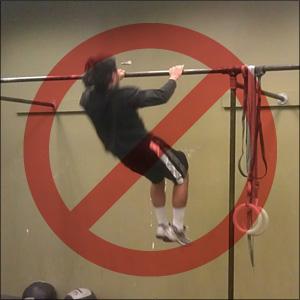
“Functional” Versus “Non-Functional” Exercises
CrossFit training discourages the use of machines or isolation exercises because they believe these are somehow not “functional”. They claim since machine or isolation exercises do not mimic motor recruitment patterns similar to various activities of daily life that they are not “functional” and are somehow less effective at improving functional ability or transferring to improved performance in other activities. This is wrong.
An exercise does not have to mimic the motor recruitment pattern of another activity for the strength gained from that exercise to transfer to it. If you strengthen the muscles involved in performing some activity, performance in that activity will improve regardless of the equipment used or exercises performed. There is no transfer of skill from an exercise to any other movement, no matter how similar. Skill is highly specific. If you want to improve the skill in performing a specific movement or activity, you need to practice the proper performance of that movement or activity. Performing exercises that mimic a movement will certainly develop strength in the muscles involved, but there will be no positive transfer of skill, and no benefit over doing other exercises that effectively work the same muscles.
That being said, free weight and body weight exercises may provide certain psychological benefits that can’t be obtained from machine training. While both are effective for increasing muscular strength, the more concrete experience of free weight and body weight training may provide a better estimate of and confidence in one’s actual physical ability than the more abstract experience of machine training. It is harder to relate the weight you use on a lower back or trunk extension machine to your ability to pick heavy things up off the ground than the weight you deadlift. Certain free weight exercises also teach proper body mechanics for other movements – someone who learns to deadlift properly is more likely to move in a safer more effective manner when picking up other things.
It is also important to consider many commercial exercise machines are poorly designed. While a properly designed machine provides advantages over free weights and body weight an improperly designed machine can reduce the safety or effectiveness of an exercise. You are better off performing free weight or body weight exercises than using machines with incorrect biomechanics, poor adjustability, high friction or other design flaws. Ultimately the equipment you train with is not as important as how you use it, however.
Cardiovascular and Metabolic Conditioning
CrossFit routines often incorporate running, cycling or rowing for cardiovascular and metabolic conditioning. While it is necessary to run, cycle, or row if your goal is to improve the specific skills of running, cycling, and rowing, if your goal is general cardiovascular conditioning high intensity strength training is a better option. During an interview with Dr. Stephen Langer on the show Medicine Man in the early 1980’s, Arthur Jones said,
“…the lifting of weights is so much superior for the purpose of improving the cardiovascular condition of a human being that whatever is in second place is not even in the running, no pun intended. That is to say, running is a very poor, a very dangerous, a very slow, a very inefficient, a very nonproductive method for eventually producing a very limited, low order of cardiovascular benefit. Any, ANY, result that can be produced by any amount of running can be duplicated and surpassed by the proper use of weight lifting for cardiovascular benefits. Now I realize that there are hundreds of thousands, perhaps millions of people in this country who don’t understand that, who don’t believe that, who will not admit that. Now these people are simply uninformed. Certainly, it’s possible to run with no benefit, it’s possible to lift weights with no benefit. I’m talking about the proper use of weight lifting; and properly applied, weight lifting will improve your cardiovascular benefit to a degree that is impossible to attain with any amount of running.”
When compound exercises or even simple exercises involving larger muscle groups are performed with a high level of intensity and little or no rest is allowed between exercises the demand on the cardiovascular system can be as high or higher than any other activity performed for the purpose of cardiovascular conditioning. A six-month study conducted at Philipps University in Marburg Germany in 2003 demonstrated equivalent improvements in cardiovascular conditioning between high intensity training using a Nautilus-style circuit routine and traditional cardiovascular training of equal duration and frequency (Maisch B, Baum E, Grimm W. Die Auswirkungen dynamischen Krafttrainings nach dem Nautilus-Prinzip auf kardiozirkulatorische Parameter und Ausdauerleistungsfähigkeit (The effects of resistance training according to the Nautilus principles on cardiocirculatory parameters and endurance). Angenommen vom Fachbereich Humanmedizin der Philipps-Universität Marburg am 11. Dezember 2003).
From a Feb 2005 article on the study in Internal Medicine News,
“A 6-month structured Nautilus weightlifting program resulted in improvements in cardiocirculatory fitness to a degree traditionally considered obtainable only through endurance exercises such as running, bicycling, and swimming, said Dr. Baum, a family physician at Philipps University, Marburg, Germany.
“This opens up new possibilities for cardiopulmonary-oriented exercise besides the traditional stamina sports,” she noted. New exercise options are desirable because some patients just don’t care for endurance exercise, which doesn’t do much to improve muscular strength and stabilization.
A more recent review paper published in the Journal of Exercise Physiology states, “…the key factor in determining physiological adaptations to promote cardiovascular fitness is intense muscular contraction” and that “…these adaptations are, for the most part, a result of resistance training at high intensity (i.e., performed to failure).” (Steele J, Fisher J, McGuff D, Bruce-Low S, Smith D. Resistance Training to Momentary Muscular Failure Improves Cardiovascular Fitness in Humans: A Review of Acute Physiological Responses and Chronic Physiological Adaptations. JEPonline 2012;15(3):53-80.)
Regarding metabolic conditioning, research suggests that while moderate-intensity aerobic training may improve maximal aerobic power it does not improve anaerobic capacity, however high intensity interval training will improve both anaerobic and aerobic performance. High intensity strength training performed with compound/multi-joint exercises for moderate to high repetitions and short rest intervals can be used to accomplish the same goals, along with improvements in muscular strength.
Coordination, Agility, Balance, Accuracy, etc.
Coordination, agility, balance, and accuracy are not aspects of fitness or factors of functional ability themselves, but dependent on the general factors of muscular strength and endurance and specific motor skills.
Coordination is the efficient interaction of different muscle groups in producing movement. Agility is how efficiently and quickly you are able to move and change direction. Balance is your ability to keep your center of gravity over your base. Accuracy is your ability to move with precision. Since all of these are dependent on strength and endurance they can be improved in general by getting stronger and improving cardiovascular and metabolic conditioning. However, coordination, agility, balance, and accuracy in the performance of specific movements involves specific motor skills which are not improved by performing other movements or activities. The extent to which CrossFit or any other exercise program would improve these as general qualities, as opposed to the specific skills of a particular movement or activity is entirely a matter of improving the general factors mentioned above.
Doing CrossFit will improve your coordination, agility, balance, and accuracy more in the specific drills and movements done regularly as part of the workouts, but there is nothing about CrossFit which makes it better than other strength and conditioning methods for improving these qualities in general. The only thing CrossFit is the best at making you better at is CrossFit.
If you are a real athlete or work in a physically demanding profession you should avoid CrossFit to minimize the risk of injuries which can interfere with or prevent you from practicing and competing in your sport or performing your job. If you want to become more coordinated, agile, etc. in the movements of your sport or profession then devote time to learning and practicing those specific skills instead.
Total Conditioning; Faster, Safer and More Efficiently
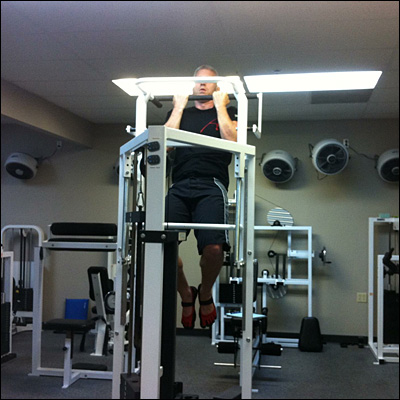 If your goal is to maximize your functional ability you can do so more quickly, safely and efficiently with a proper high intensity training program following a few basic guidelines:
- Perform one set of one or two exercises for all major muscle groups (favoring compound/multi-joint movements), using a weight which allows for the performance of at least one but not more than three minutes of continuous, slow, strict repetitions.
- Perform each exercise to the point of momentary muscular failure, then continue to contract the target muscles isometrically for five to ten seconds.
- Perform exercises in order of largest to smallest muscle groups worked.
- Move from one exercise to the next as quickly as possible; allow no rest in between.
- Perform no more than three workouts per week on non-consecutive days. Many people get better results training less, depending on individual recovery ability.
- Maximize recovery and adaptation by getting adequate sleep each night, minimizing stress, and eating well (lots of beef, fish, eggs, vegetables, fruit, and nuts, minimize intake of hyper palatable, highly processed foods).
Comments on this entry are closed.
Hi Drew,
If I could just add that the video also said that if a person deliberately moves the weight slowly not all the glycolytic fibres would be recruited/worked.
Arthur Jones wrote an article something along the lines; once you add weight to a limb the movement speed becomes slower, the more weight that you add the slower the movement speed becomes.
If accelerated speed of movement is a key factor in muscle fibre recrutiment why not use only weight in your limbs and accelrate them as fast as possible. To my way of thinking you can’t have both heavy weights and fast movements.
Steven,
Regardless of the speed of movement all of the motor units in the working muscles including those comprised of glycolytic fibers will be recruited and worked if the effort is high enough. You can even do this with a speed of zero using timed static contraction protocol.
The key is effort. You can get good results with almost any training method as long as the effort is high enough, but not all methods will produce results as quickly, be as time efficient, or be as safe and sustainable in the long run. It is not enough to just train very hard (and to their credit, CrossFitters do train very hard), you also have to train safely and efficiently.
Hi Drew,
Thanks for the response.
Mr. Baye,
Thank you for the effort you put into your site. I agree with the viewpoint you present in this article. I believe too many people have misguided understanding of fitness pursuits and get caught up in the appeal of this type of “sport-based” training without understanding the risk. I do have two comments where I hope you can enlighten me: please explain how “intent” can alter muscle recruitment patterns and do you believe it hurts credibility of the message by quoting HIT advocates like McGuff, Bruce-Low, and, certainly, Arthur Jones? How much credibility would you give an anti-HIT article quoting Fleck, Kraemer, & Stone? Thanks for your consideration.
Best Regards,
Matt (Long time HIT advocate, too)
Iowa City, Iowa
Matt,
I use the term “intent” to describe the movement you are attempting to produce during an exercise, which determines which muscles are recruited and their level of involvement. This can have different meanings in different contexts, for example if you’re talking about intended versus possible speed of movement as the muscles fatigue, or intended versus possible path of movement due to various physical constraints.
As for credibility, the arguments and evidence need to stand on their own merit, regardless of who is presenting them. Of course, HIT people are going to tend to view people like Jones, McGuff, Bruce-Low, Otto, Carpinelli, etc. as more credible than Kraemer, Fleck, Stone, Garhammer, etc. and vice versa due to confirmation bias. Everybody has a tendency to be more accepting of things that confirm their perspective or beliefs on a topic and to be more skeptical of things that contradict them. You have to do your best to set that aside and just look at the evidence critically and interpret it as objectively as you can.
One of the hardest things to do, but one of the most effective ways to continue to learn and improve, is to constantly challenge and test your own positions and beliefs. If you can do this honestly and objectively you will improve your understanding of the subject by a process similar to natural selection; by increasing the critical pressure on your own ideas the good ones become stronger and bad ones are weeded out and corrected.
Thank you for the thorough response. I understand the use of the word “intent” in its broad, dictionary definition sense and, although anonymous to you, I have an academic background in exercise and physiology. My question was more to suss out the nature of “intent” in the sentence:
“After this point the intent should be to move the weight as fast as possible, although the actual speed will be anything but.”
What are the merits of moving, no, intending on moving the weight “as fast as possible” as opposed to simply moving the weight? (I understand that as the process of inroad occurs, the properly selected weight won’t actually move fast) Why the distinction? I have read this concept both in Nautilus Bulletin #1 (or was it 2?)and elsewhere in which the author’s belief was along the lines of “moving fast is essential to recruiting those fast-twitch fibers, you know, the good ones…” I was just trying to gain insight on why you stated the above. Does the intention, the cognitive aspect, on moving an appropriately heavy weight as fast, in the given exercise, as possible have a different effect on recruitment patterns, reps completed, TUL, etc, from a set wherein one focuses on just lifting the weight or even maintaining a measured speed? Would it not also be likely that if one’s intent is divided from technique towards speed of movement that there is an increased likelihood of substitution and therefore a detraction from the targeted prime mover?
I also understand the use of supporting “unbiased” information to bolster an arguement. We are all well aware that there is a presidential election, and confirmation bias in an election year is like Santa Claus is to Christmas. Maybe your intent (see, I know that word) is to only write to a HIT audience. I was just wondering, since I linked to this article from the one explaining what HIT is, if using the same handful of pro-HIT sources ultimately best serves to get the “HIT message” across. Your other article seemed to want to “clear the water” as to what HIT is (and isn’t) aimed at those uninitiated to HIT. I’m sure you get many curious non-HIT tourists who have Googled, “what is HIT?”, and arrived at your site. It seems to me that HIT, as you advocate it, is the best general approach to exercise, but is represented on the Internet as a subcultural and fractured niche in a small corner of the exercise community that may repulse those that might reap its benefits due to those that represent it – I’m sure you’re well aware of what a nightmare the Dr. Darden forum has become. They’re the voice of HIT? Scary.
I agree on keeping an open mind – but not so open your brain falls out – to new avenues in life. As I have aged, my exercise approach has deviated from a strict interpretation of HIT but that still reflects its core tenets. I also advocate experimenting on yourself to test the value of different approaches to exercise. Why take someone’s word for it? Try it out yourself. What are a few months of time trying something new in the context of your lifetime of exercise?
Anyway, thank you for indulging my impulse to write something in your comments section. I appreciate your efforts of maintaining your site with frequent updates, interesting articles, and useful information, and of presenting HIT in good light. I think your good reputation in the HIT community is well deserved.
Regards,
Matt
Matt,
It makes little difference to motor recruitment whether you are actually moving fast or just intending to move fast as long as the load is appropriate and the set is performed for a long enough duration to recruit all the motor units in the muscles being worked, but it is safer to move more slowly. As long as you are trying to move as fast as you can once moving more quickly than prescribed becomes impossible you will still have recruited all the motor units in the muscles worked but minimizing acceleration reduces the risk of injury. As long as correct form is maintained you shouldn’t have substitution occurring. That’s the trick, though.
I agree with your observation about HIT appearing to be a small subculture and it is definitely fractured; there are many cliques within HIT that don’t all get along with each other and unfortunately some are outright hostile towards each other. It certainly doesn’t help the image of HIT with the rest of the fitness industry or the public in general and in many ways it’s just as cultish as CrossFit.
I like and respect Ell Darden but the less said about what has become of his forum, the better. I would love to see him break away from Biotest/T-Nation and start over with a blog format similar to this site or Doug McGuff’s and John Little’s Body by Science blog.
Hi Drew. I have a few simple questions.
1. Is doing the big 5 once every two weeks enough to see gain?
I do boxing and I find myself tired through out the week and unable to perform well in sparring matches until 5-6 days later, but then at that point I’m ready for my next workout. My theory is to workout say on monday, rest for the week. Spar a lot the second week, rest over the weekend and workout again that monday.
2. What’s your take on stretching or warming up? I have heard a lot of mixed things about this.
3. How would I be able to maintain weight in my weight class if I’m on a progressive weight training program? I know losing body fat would balance it out.
I’m just trying to find the right balance between my boxing training and my big 5.
Thanks Drew.
Amir,
If you’re training hard enough very little volume or frequency of exercise is necessary to improve, but most people don’t need anywhere near that amount of recovery between HIT workouts even when engaged in other demanding athletic activities. Other factors like nutrition, rest, work, and stress can affect this so you might want to look at how to improve those so you are capable of recovering more quickly and training more frequently.
A warm up is unnecessary for exercise in most cases. See the article Warming Up.
Stretching is also unnecessary before working out and highly overrated. Simply getting stronger will improve flexibility considerably in most people.
As for maintaining weight, first focus on gradually getting your bodyfat as low as possible. If your bodyweight in lean condition starts getting close to the upper limits of your weight class due to muscle gain reduce your calorie intake. Regardless of how hard you’re training you’re not going to put on any more muscle or get any heavier if you’re not eating enough.
Hi Drew I train MMA 6 times a week I do striking every Mondays and Thursdays grappling every Tuesdays and Fridays and strength and conditioning every Wednesdays and Saturdays but since I’ve read about the big 5 exercises I now want to change all that. How do I balance my MMA training with the big 5?
Kyle,
I would start with your current schedule but I would add direct back, neck, and grip work at the end of the Big Five for MMA: stiff-legged deadlift or trunk extension, neck extension, neck flexion, and gripping or wrist flexion and extension.
Hi Drew,
I am a huge fan of the Mike Mentzer philosophy and ever since implementing it, I have noticed an improvement in the quality of muscles. I have not gained size but my muscles are now rock hard even when I am not actively flexing them. My main issue is that I have developed moderate pain in both triceps, where they attack the the elbow. I take about 1 minute between sets, my question is, am I not giving my muscles enough time to rest in between sets. It only makes sense that I give more time to rest seeing as how all of my working sets go to failure. let me know what you think. Btw, I have never seen an active crossfit participant that had a nice physique.
Mo,
In most cases I recommend performing only one set per exercise and resting as little as possible between exercises. I usually move from one exercise to the next with only a few seconds in between and would consider a minute way too long if your goal is to improve overall fitness.
I can’t comment on the pain in your triceps without more information, but this is often a form issue.
Drew: I just wanted to elicit a comment or two from you in regards to a recent showing of “Extreme Makeover”. In it, the trainee,a former college football lineman, was a very large guy. This same guy had a history of bad knees. In almost the same breath, Chris(the host) said something to the effect that he wanted to strengthen the trainee’s knees because the were a potential injury,and then had the trainee doing sprints with sanbags on! Talk about saying one thing and doing another! I was sitting with my daughter, pointing out how dangerous it was to have an obese man with bed knees sprinting with 45 lb sandbags, when the trainee blew his knee out right on the show! As much as I respect the wish to transform obese people and improve their lives, this show(just like The Biggest Loser)are a joke. I am no trainer, far from it; in fact I have been fighting my own battle of the bulge over the last few years. I am down almost 50 lbs, and have another 20-25 to go. But even I can see that having trainess do what they do on these shows is malpractice. But it looks great on TV, and that is what drives these shows…the struggles, the sorrow, the sweat, the tears. How would it look if you put a trainee on a reduced calorie diet and then had them do 1-2 HIT workouts in under 20 minutes? Forget it, no one would watch. As I said, I DO respect that there have been some amazing transformations on these shows, and some good has resulted, but how crazy are the risks they put these people through?
Lou,
A proper exercise program would not make for good television for most people. The majority of television viewers seem to prefer loud, obnoxious, and stupid, and shows like Extreme Makeover and The Biggest Loser cater to that.
I have helped many obese people lose fat without ever having them do any of the ridiculous things they do on those shows, without ever shouting at or insulting them or speaking condescendingly, and without ever injuring anyone in the process. Drama and histrionics might get ratings, but it has no place in a proper exercise program.
Drew:
Thanks for your comments. You would think that one of the channels such as Discovery or the Science Channel would address the issue of HIT vs what is popular today. But then again the people feeding the story ideas to the producers are not interested in “truth”, but a good story. Keep up the great work.
Lou
Hello Drew,I started working with weights in 1948 when Buster McShane brought John Grimek over to Ireland after defeating Steve Reeves for the Universe title. I am now 88 and still working out twice weekly (in addition to working 40 hours)Two years ago I began to lose muscle mass and despite tweaking reps and exercises have not been able to gain it back.I am slowing rebuilding my strength level while trying to stay injury free.I take no drugs,have no aches or pains and actually have little to complain about.Having said all that I wd appreciate any comments or advice offered
You have a lot to say and what you say has value and integrity. Thank you .