Update July 15
First off, thanks to everybody who has pre-ordered Elements of Form. It’s been a long project, one I’ve rewritten and completely restarted a few times over, and am glad to be nearing completion of. I am still finishing a few chapters and wrapping up the bonus e-book and have moved the release date to AUGUST 31. Because of the delay everybody who has already pre-ordered the book will be receiving a bonus video as well discussing exercise performance before the end of the month. Anyone who pre-orders between then and August 31 will receive this video around the end of July.
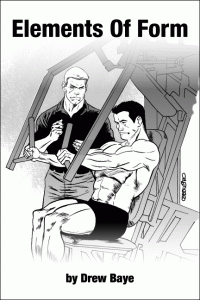
Click here to pre-order Elements of Form
Comments on this entry are closed.
Hey there Drew. Where abouts do we find the video? Thanks.
Hey Greg,
Between one-on-one and phone clients and other projects I’m still behind on this. I will be e-mailing the info directly to everybody who pre-ordered as soon as the video is up.
Drew,
What is the status of the book release?
Hey Randy,
With my current schedule it looks like I’ll be sending the e-book out by next weekend or early next week, and the print books will need about another week for formatting. Once those are finished and out I’ll be wrapping up the exclusive bonus e-book and shooting the video.
Hey Drew,
Any chance of an update on EoF, as yet more deadlines have come and gone?
Thanks
Jamie.
Hey Jamie,
I’m working on it as much as possible between clients, consultations, and school, but have had various setbacks. I hope to wrap it up and have it sent out to everybody very soon so I can move on to other things.
Okey dokes, thanks for the update Drew, much appreciated.
Best,
Jamie.
Thanks Drew. Take your time. Appreciate the work you’re putting into it.
Thanks Greg,
I hope to have it out soon, though. Lots of people are getting impatient and understandably so.